Pengertian Art Deco


 Amerika Serikat
dimasa perang dunia mencitrakan dirinya sebagai negara yang memiliki kemajuan
peradabannya melaui Ibu Kotanya New York (sebelum dipindahkan ke Washington
D.C) melalui desain bangunannya yang merepresentasikan AS yang tangguh, anggun
dan megah.Selain gedung Crysler, dan gedung Empire State, masih ada tempat
dimana menjadi daerah Bersejarah Art Deco yang berlokasi di ujung selatan
pantai Miami, Florida (gambar kanan) yang juga berkembang dimasa perang dunia
1920-an hingga 1930-an.
Amerika Serikat
dimasa perang dunia mencitrakan dirinya sebagai negara yang memiliki kemajuan
peradabannya melaui Ibu Kotanya New York (sebelum dipindahkan ke Washington
D.C) melalui desain bangunannya yang merepresentasikan AS yang tangguh, anggun
dan megah.Selain gedung Crysler, dan gedung Empire State, masih ada tempat
dimana menjadi daerah Bersejarah Art Deco yang berlokasi di ujung selatan
pantai Miami, Florida (gambar kanan) yang juga berkembang dimasa perang dunia
1920-an hingga 1930-an.
 Dalam tahun 1930an, Art Deco dikenal sebagai sosok
teknologi dan kecepatan di Amerika Serikat. Hal tersebut terlihat pada
pengunaan bahan-bahan yang modern dan glossy, permukaan yang halus dan garis
mendatar yang aerodinamis. Versi Art Deco yang lebih halus dikenal sebagai
Streamlined Modern yang menggantikan detail pola geometris pada masa awal Art
Deco.
Dalam tahun 1930an, Art Deco dikenal sebagai sosok
teknologi dan kecepatan di Amerika Serikat. Hal tersebut terlihat pada
pengunaan bahan-bahan yang modern dan glossy, permukaan yang halus dan garis
mendatar yang aerodinamis. Versi Art Deco yang lebih halus dikenal sebagai
Streamlined Modern yang menggantikan detail pola geometris pada masa awal Art
Deco.

Pengaruh Art Deco Terhadap dunia fesyen di
Amerika dan Eropa sangatlah kuat di era 1920’an namun istilah “Art deco”
sendiri tidak dikenal.
 Di
Indonesia tentunya banyak bangunan bergaya Art Deco yang masih harus dicari dan
diteliti.Berawal dari rasa ingin tahu lebih mendalam mengenai
Art Deco, kami mencoba menginjakan kaki di kawasan Kota Tua Jakarta yang
dimulai dari Stasiun Jakarta Kota atau yang lebih dikenal dengan istilah
Stasiun Beos.Kata
“Beos” sendiri
diperkirakan berasal dari nama Bataviasche
Ooster Spoorweg Maatschapij (
Maskapai Angkutan Kereta Api Batavia Timur). Versi lain, Beos berasal dari kata
Batavia En Omstreken, yang artinya
Batavia dan Sekitarnya.
Stasiun ini diresmikan pada tahun 1928 oleh Gubernur Jendral JHR. A.C.D. de
Graeff. Dirancang sebagai sebuah arsitektur bergaya Art Deco, oleh seorang
arsitek Belanda kelahiran Tulungagung, FJL Ghijsels pada tahun 1928 dengan
sebutan Stasiun Batavia Selatan (Batavia
Zuid). Stasiun ini dianggap sebagai salah satu monumen terpenting dalam
wacana arsitektur bergaya Indis (Indische
Bouwen) – gaya yang memadukan unsur arsitektur modern Barat dengan nilai
nilai lokal.
Di
Indonesia tentunya banyak bangunan bergaya Art Deco yang masih harus dicari dan
diteliti.Berawal dari rasa ingin tahu lebih mendalam mengenai
Art Deco, kami mencoba menginjakan kaki di kawasan Kota Tua Jakarta yang
dimulai dari Stasiun Jakarta Kota atau yang lebih dikenal dengan istilah
Stasiun Beos.Kata
“Beos” sendiri
diperkirakan berasal dari nama Bataviasche
Ooster Spoorweg Maatschapij (
Maskapai Angkutan Kereta Api Batavia Timur). Versi lain, Beos berasal dari kata
Batavia En Omstreken, yang artinya
Batavia dan Sekitarnya.
Stasiun ini diresmikan pada tahun 1928 oleh Gubernur Jendral JHR. A.C.D. de
Graeff. Dirancang sebagai sebuah arsitektur bergaya Art Deco, oleh seorang
arsitek Belanda kelahiran Tulungagung, FJL Ghijsels pada tahun 1928 dengan
sebutan Stasiun Batavia Selatan (Batavia
Zuid). Stasiun ini dianggap sebagai salah satu monumen terpenting dalam
wacana arsitektur bergaya Indis (Indische
Bouwen) – gaya yang memadukan unsur arsitektur modern Barat dengan nilai
nilai lokal.

 Dan destinasi terakhir kami yaitu Museum Keramik dan
Seni Rupa yang terletak
di Jalan Pos Kota No 2, Kotamadya Jakarta Barat, Provinsi DKI
Jakarta, Indonesia. Museum yang tepatnya berada di
seberang Museum Sejarah Jakarta. Disana kami menemukan perabot makan dan tanga
bergaya Art Deco Klasik.
Dan destinasi terakhir kami yaitu Museum Keramik dan
Seni Rupa yang terletak
di Jalan Pos Kota No 2, Kotamadya Jakarta Barat, Provinsi DKI
Jakarta, Indonesia. Museum yang tepatnya berada di
seberang Museum Sejarah Jakarta. Disana kami menemukan perabot makan dan tanga
bergaya Art Deco Klasik.

Art Deco adalah gaya populer yang dimulai dari 1920
hingga akhir dekadenya di tahun 1939. Art Deco banyak gunakan pada design
arsitektur, idustri, interior, seni grafis dan film, serta fesyen. Art deco
sendiri berasal dari pameran pada tahun 1925 di yang berjudul “Paris exposition des Art Decoratifs et
Industries” di kota Paris, Perancis. Dalam pengertian lain, Art Deco
merupakan gabungan dari beberapa gaya dan gerakan pada awal abad ke-20, yang
didalamnya terdapat Konstruktsionisme, Kubisme, Moderenisme, Bahaus, Art
Nouveau, dan Futurisme. Art Deco sangat terkenal apabila dilihat pada design
alat transportasi seperti mobil, pesawat terbang, dan kapal laut sehingga dianggap
sebagai simbol modernitas. Meskipun banyak muatan
politik atau filsafat di dalam Art Deco, namun secara murni Art Deco memiliki sifat
dekoratif. Pada eranya, gaya ini dianggap anggun , fungsional, dan ultra
modern.
SEJARH ART DECO
Setelah Eksposisi Dunia 1900, berbagai seniman
Perancis membentuk sebuah kelompok seniman dekorasi resmi yaituh ,La Société des artistes décorateurs.
Para pendirinya antara lain adalah Hector Guimard,Eugène Grasset, Raoul
Lachenal, Paul Follot, Maurice Dufrene dan Emile Decour. Para seniman ini sangat mempengaruhi prinsip-prinsip Art
Deco pada umumnya. Art Deco adalah sebuah gerakan desain yang
populer yang dimulai dari 1920 hingga 1939, Nama Art
Deco diberikan sebagai nama lambang kemajuan
peradaban yang popular antara tahun 1920 sampai dengan 1930. Maksud perhimpunan ini adalah
memperlihatkan desain tempat terkemuka dan evolusi seni dekoratif Perancis
secara internasional. Wajarlah bila mereka mengorganisir Exposition Internationaledes Arts Décoratifs et Industriels Modernes
(Eksposisi Internasional untuk Seni Industri dan Dekoratif Modern) pada 1925, yang menampilkan seni dan
kepentingan bisnis Perancis. Gerakan
awal ini disebut Style Moderne. Periode atau Gaya Periode Modern antara dua perang dunia inilah "Art Deco" sebuah langgam eklektik
muncul dengan menyatukan kosa-kosa bentuk dari berbagai sumber. Dimulai dari
Perancis kata Art Deco merupakan singkatan dari Art Decoratif yang muncul dalam
nama penyelenggaraan pameran "Exposition
Internationale
des Arts Decoratifs et Industriels Modernes" 1 pada tahun 1925. Dalam
pameran inilah ditampilkan langgam baru dalam desain untuk seni terap dan
arsitektur yang kemudian menyebar ke seluruh dunia. Art Deco adalah sebuah
kontradiksi yang terlahir diantara kegemilangan tahun 20-an dan depresi
(tekanan) tahun 30-an. Ketika orang ingin melupakan trauma perang dunia,
menikmati hidup dan melihat ke masa depan, tampilah Art Deco yang mewakili pola
kehidupan keseharian dan gaya elegan, canggih dan modern. Langgam baru ini
mewarnai dan terlahir bersamaan munculnya gaya hidup baru yang mengekspresikan
kemakmuran hidup. Fashion, grafis, desain produk dan film menampilkan
idiom-idiom yang sama pada saat yang bersamaan. Hiburan dan perjalanan menjadi
berita-berita baru sebagai perayaan lahirnya era komersialisme dan teknologi
baru seiring dengan munculnya kecepatan sebagai metafora pada era modern. art deco sangat mempengaruhi seni dekoratif waktu itu yang berkembang seperti
arsitektur, desain interior, dan desain industri, maupun seni visual seperti
misalnya fesyen, lukisan, seni grafis,bangunan
dan film. Gerakan ini pada awal mulanya dalam pengertian tertentu,
Popularitasnya memuncak pada 1920-an. Art Deco muncul dari sebuah periode ketika industrialisasi yang pesat telah
mengubah macam budaya. Salah satu atribut utama adalah pelukan dari teknologi yang terbaru .Hal Ini sangat berarti membedakan Art Deco dari motif
organik yang
banyaknya disukai oleh pendahulunya yaitu Art Nouveau. Art
Deco banyak mengunakan gradasi warna yang halus serta warna yang mengesankan
efek kilauan atau lengkungan logam dalam sebuah karya seninya .Art Deco juga
banyak menggunakan bahan-bahan mahal dan sedikit ornamen hias yang bisa lebih
menarik banyak perhatian . Ornamen yang digunakan dalam Art Deco lebih beraturan dan banyak menggunakan
garis-garis lurus atau persegi. Selama masa jayanya, Art Deco menggambarkan kemewahan,
glamor, kegembiraan, dan iman dalam kemajuan sosial dan teknologi. Meskipun banyak gerakan desain mempunyai akar dan maksud
politik atau filsafati, Art Deco murni bersifat dekoratif.
yang menampilkan seni dan
kepentingan bisnis Perancis. Gerakan
awal ini disebut Style Moderne. Periode atau Gaya Periode Modern antara dua perang dunia inilah "Art Deco" sebuah langgam eklektik
muncul dengan menyatukan kosa-kosa bentuk dari berbagai sumber. Dimulai dari
Perancis kata Art Deco merupakan singkatan dari Art Decoratif yang muncul dalam
nama penyelenggaraan pameran "Exposition
Internationale
des Arts Decoratifs et Industriels Modernes" 1 pada tahun 1925. Dalam
pameran inilah ditampilkan langgam baru dalam desain untuk seni terap dan
arsitektur yang kemudian menyebar ke seluruh dunia. Art Deco adalah sebuah
kontradiksi yang terlahir diantara kegemilangan tahun 20-an dan depresi
(tekanan) tahun 30-an. Ketika orang ingin melupakan trauma perang dunia,
menikmati hidup dan melihat ke masa depan, tampilah Art Deco yang mewakili pola
kehidupan keseharian dan gaya elegan, canggih dan modern. Langgam baru ini
mewarnai dan terlahir bersamaan munculnya gaya hidup baru yang mengekspresikan
kemakmuran hidup. Fashion, grafis, desain produk dan film menampilkan
idiom-idiom yang sama pada saat yang bersamaan. Hiburan dan perjalanan menjadi
berita-berita baru sebagai perayaan lahirnya era komersialisme dan teknologi
baru seiring dengan munculnya kecepatan sebagai metafora pada era modern. art deco sangat mempengaruhi seni dekoratif waktu itu yang berkembang seperti
arsitektur, desain interior, dan desain industri, maupun seni visual seperti
misalnya fesyen, lukisan, seni grafis,bangunan
dan film. Gerakan ini pada awal mulanya dalam pengertian tertentu,
Popularitasnya memuncak pada 1920-an. Art Deco muncul dari sebuah periode ketika industrialisasi yang pesat telah
mengubah macam budaya. Salah satu atribut utama adalah pelukan dari teknologi yang terbaru .Hal Ini sangat berarti membedakan Art Deco dari motif
organik yang
banyaknya disukai oleh pendahulunya yaitu Art Nouveau. Art
Deco banyak mengunakan gradasi warna yang halus serta warna yang mengesankan
efek kilauan atau lengkungan logam dalam sebuah karya seninya .Art Deco juga
banyak menggunakan bahan-bahan mahal dan sedikit ornamen hias yang bisa lebih
menarik banyak perhatian . Ornamen yang digunakan dalam Art Deco lebih beraturan dan banyak menggunakan
garis-garis lurus atau persegi. Selama masa jayanya, Art Deco menggambarkan kemewahan,
glamor, kegembiraan, dan iman dalam kemajuan sosial dan teknologi. Meskipun banyak gerakan desain mempunyai akar dan maksud
politik atau filsafati, Art Deco murni bersifat dekoratif.
yang menampilkan seni dan
kepentingan bisnis Perancis. Gerakan
awal ini disebut Style Moderne. Periode atau Gaya Periode Modern antara dua perang dunia inilah "Art Deco" sebuah langgam eklektik
muncul dengan menyatukan kosa-kosa bentuk dari berbagai sumber. Dimulai dari
Perancis kata Art Deco merupakan singkatan dari Art Decoratif yang muncul dalam
nama penyelenggaraan pameran "Exposition
Internationale
des Arts Decoratifs et Industriels Modernes" 1 pada tahun 1925. Dalam
pameran inilah ditampilkan langgam baru dalam desain untuk seni terap dan
arsitektur yang kemudian menyebar ke seluruh dunia. Art Deco adalah sebuah
kontradiksi yang terlahir diantara kegemilangan tahun 20-an dan depresi
(tekanan) tahun 30-an. Ketika orang ingin melupakan trauma perang dunia,
menikmati hidup dan melihat ke masa depan, tampilah Art Deco yang mewakili pola
kehidupan keseharian dan gaya elegan, canggih dan modern. Langgam baru ini
mewarnai dan terlahir bersamaan munculnya gaya hidup baru yang mengekspresikan
kemakmuran hidup. Fashion, grafis, desain produk dan film menampilkan
idiom-idiom yang sama pada saat yang bersamaan. Hiburan dan perjalanan menjadi
berita-berita baru sebagai perayaan lahirnya era komersialisme dan teknologi
baru seiring dengan munculnya kecepatan sebagai metafora pada era modern. art deco sangat mempengaruhi seni dekoratif waktu itu yang berkembang seperti
arsitektur, desain interior, dan desain industri, maupun seni visual seperti
misalnya fesyen, lukisan, seni grafis,bangunan
dan film. Gerakan ini pada awal mulanya dalam pengertian tertentu,
Popularitasnya memuncak pada 1920-an. Art Deco muncul dari sebuah periode ketika industrialisasi yang pesat telah
mengubah macam budaya. Salah satu atribut utama adalah pelukan dari teknologi yang terbaru .Hal Ini sangat berarti membedakan Art Deco dari motif
organik yang
banyaknya disukai oleh pendahulunya yaitu Art Nouveau. Art
Deco banyak mengunakan gradasi warna yang halus serta warna yang mengesankan
efek kilauan atau lengkungan logam dalam sebuah karya seninya .Art Deco juga
banyak menggunakan bahan-bahan mahal dan sedikit ornamen hias yang bisa lebih
menarik banyak perhatian . Ornamen yang digunakan dalam Art Deco lebih beraturan dan banyak menggunakan
garis-garis lurus atau persegi. Selama masa jayanya, Art Deco menggambarkan kemewahan,
glamor, kegembiraan, dan iman dalam kemajuan sosial dan teknologi. Meskipun banyak gerakan desain mempunyai akar dan maksud
politik atau filsafati, Art Deco murni bersifat dekoratif.
TOKOH ART DECO
Tokoh Art Deco dalam desain grafis yang terkenal,
khususnya di Prancis diantaranya AM, Cassandre dan Jean Calu
CIRI KHAS DAN KARAKTERISTIK ART DECO
Art
Deco sendiri tidaklah terwujud dengan sendirinya, melainkan dipengaruhi aliran
kubisme dan Fauvisme serta juga gaya primitive Afrika, Mesir dan Indian Aztec,
Maya di Amerika Selatan. Jeff Hoffman, Frank Lioyd, Adolf Loos yang merupakan
pedisain Modernisme awal banyak diserap kedalam Art Deco. Tersebar di dipenjuru
Eropa, Perancis sebagai pusat Art Deco telah memiliki sekolah seni dokaratif
yaituh The Martine School yang berdiri sejak 1911. Gaya geometris Bauhaus dari
Jerman dibangunkan dengan bentuk-bentuk yang ekspresif banyak dimanfaatkan oleh
para desainer.
Art
Deco dikarakterkan dengan penggunaan bahan-bahan seperti aluminum, stainless steel, pernis, inlaid wood (kayu hias) , kulit hiu, dan
kulit zebra. Penggunaan yang tegas dari bentuk bertingkat, sapuan kurva (tidak
berliku-liku seperti Art Nouveau), pola-pola chevron , dan motif pancaran
matahari.
Istilah Art Deco berkembang sepanjang kemunculannya pada tahun
1925 tetapi tidak dipakai lebih luas sampai tahun 1960. Gaya art deco diangap
sebagai gaya yang berwawasan luas tentang pandangan dekorasi modern yang
dipengaruhi oleh berbagai macam sumber, contohnya: :
•  Awal pekerjaan arsitek Wiener
Werkstätte; disain industri fungsional, dengan akar pada akhir abad ke sembilan
belas.
Awal pekerjaan arsitek Wiener
Werkstätte; disain industri fungsional, dengan akar pada akhir abad ke sembilan
belas.
Awal pekerjaan arsitek Wiener
Werkstätte; disain industri fungsional, dengan akar pada akhir abad ke sembilan
belas.
•
Awal pekerjaan dan pikiran dari Weimar Bauhaus menyangkut tahap
penunjukkan dirinya di dalamnya.
•
Pahatan dan keramik gaya Yunani
jaman kuno perancangan semakin sedikit mendekati periode kuno
•
Bentuk fractionated, kristal dari dekoratif kubis dan futuristi
•
Fauve, warna palet
•
Bentuk yang menjengkelkan dari
gaya radikal Neoklasik memacu terbentuknya gaya art deco: Boullée, Schinkel
•
Art deco sering dihubungkan
dengan musik Jazz
•
Motif binatang dan bentuk daun-daunan
tropis, ziggurats, kristal,
sunbursts, motif air mancur yang disesuaikan mode
•
Gaya art deco juga mempengaruhi
penampilan wanita, yaitu gaya atletik luwes " modern" wanita, rambut yang dipotong pendek menandakan gadis
modern tahun l920-an
•
Tahun teknologi mesin dimana
ditemukan radio dan pemancar.
ART DECO PADA SENI
BANGUNAN
Kita dapat melihat maha karya Art Deco yang hingga kini masih berdiri
kokoh di kota New York, Amerika Serikat. Tepatnya di timur dari pulau Manhattan
pada persimpangan 42nd Street dan Lexington Avenue yaituh Gedung Pencakar Langit Crysler (Gambar Kiri)
yang dibangun pada tahun 1928 hingga 1930 dengan tinggi 319 meter dan
ditambahkan pada puncaknya menjadi 365.8 M untuk Bank of America. Dirancang
oleh William Van Allen. Memiliki 1046 Lantai, hingga kini masih berfungsi
sebagai perkantoran.
Ciri khas Art Deco
yang berbentuk pola cevron atau zigzag dan motif pancaran matahari yang. Yang
dapat kita lihat memiliki kesamaan dengan kaya tradisional suku Maya di Amerika
Selatan. Pengunaan material Stainess Stell pada bagian luar gedung menegaskan
karakter Art Deco yang tegas dan kuat yang mereprestasikan kemajuan peradaban
Amerika Serikat dimasa perang.
Amerika Serikat
dimasa perang dunia mencitrakan dirinya sebagai negara yang memiliki kemajuan
peradabannya melaui Ibu Kotanya New York (sebelum dipindahkan ke Washington
D.C) melalui desain bangunannya yang merepresentasikan AS yang tangguh, anggun
dan megah.Selain gedung Crysler, dan gedung Empire State, masih ada tempat
dimana menjadi daerah Bersejarah Art Deco yang berlokasi di ujung selatan
pantai Miami, Florida (gambar kanan) yang juga berkembang dimasa perang dunia
1920-an hingga 1930-an.
ART DECO DALAM TEKNOLOGI OTOMOTIF
Streamlined
Dalam tahun 1930an, Art Deco dikenal sebagai sosok
teknologi dan kecepatan di Amerika Serikat. Hal tersebut terlihat pada
pengunaan bahan-bahan yang modern dan glossy, permukaan yang halus dan garis
mendatar yang aerodinamis. Versi Art Deco yang lebih halus dikenal sebagai
Streamlined Modern yang menggantikan detail pola geometris pada masa awal Art
Deco.
Donald
Beskey yang merupakan perancang asal Amerika Serikat menciptakan interior yang
dilengkapi dan dipadupadankan dengan pengunaan material baru seperti Barkelit (suatu
jenis plasstik), chrimeplated metal,
batu bara dan linoleum. Perncang yang berasal dari Negara Paman Sam, Raymond
Leiwy, membawa Art Deco kedalam perumahan masyarakat dengan desain garis yang
ramping untuk coldspot refigenerator.
Di
1940-an gaya Art Deco cukup berpengaruh dan cukup diperhitungkan seperti banyak
gaya desain klasik lainnya. Art deco mencerminkan suatu momen dalam budaya
kultur modern-the-age-of jaz yang divisualisasikan pada garis mobil yang
ramping (mobil streamline).
ART DECO PADA DUNIA FESYEN
Beberapa brand ternama
mengusung konsep “Art Deco” pada motif pakaian, perhiasan, sepatu, bandana,
warna cat kuku, sepatu, dan lain sebaginya. Dari era “Art Deco” sendiri hinga
kini dianggap sebagai gaya vintage namun dunia fesye mode dewasa ini mengangkan
kembali trend mode zaman dahulu khususnya “Art Deco”.
ART DECO DI INDONESIA
Di
Indonesia tentunya banyak bangunan bergaya Art Deco yang masih harus dicari dan
diteliti.Berawal dari rasa ingin tahu lebih mendalam mengenai
Art Deco, kami mencoba menginjakan kaki di kawasan Kota Tua Jakarta yang
dimulai dari Stasiun Jakarta Kota atau yang lebih dikenal dengan istilah
Stasiun Beos.Kata
“Beos” sendiri
diperkirakan berasal dari nama Bataviasche
Ooster Spoorweg Maatschapij (
Maskapai Angkutan Kereta Api Batavia Timur). Versi lain, Beos berasal dari kata
Batavia En Omstreken, yang artinya
Batavia dan Sekitarnya.
Stasiun ini diresmikan pada tahun 1928 oleh Gubernur Jendral JHR. A.C.D. de
Graeff. Dirancang sebagai sebuah arsitektur bergaya Art Deco, oleh seorang
arsitek Belanda kelahiran Tulungagung, FJL Ghijsels pada tahun 1928 dengan
sebutan Stasiun Batavia Selatan (Batavia
Zuid). Stasiun ini dianggap sebagai salah satu monumen terpenting dalam
wacana arsitektur bergaya Indis (Indische
Bouwen) – gaya yang memadukan unsur arsitektur modern Barat dengan nilai
nilai lokal.
Museum
Bank Mandiri
 |
Dilanjutkan ke Gedung
Museum Bank Mandiri (ex-Nederlandsche
Handel-Maatschappij (NHM)) dirancang oleh 3 orang arsitek belanda
yaitu J.J.J de Bruyn, A.P. Smits dan C. van de Linde.
Gedung ini mulai dibangun tahun 1929 dan pada tanggal 14
Januari 1933 dibuka secara resmi Oleh C.J Karel Van Aalst,
Presiden NHM ke-10. Gedung ex-NHM ini tampak kokoh dan megah dengan arsitektur
Niew Zakelijk atau Art Deco Klasik.
Museum Keramik dan Seni Rupa
Dan destinasi terakhir kami yaitu Museum Keramik dan
Seni Rupa yang terletak
di Jalan Pos Kota No 2, Kotamadya Jakarta Barat, Provinsi DKI
Jakarta, Indonesia. Museum yang tepatnya berada di
seberang Museum Sejarah Jakarta. Disana kami menemukan perabot makan dan tanga
bergaya Art Deco Klasik.
Beberapa
bangunan di Indonesia yang bernuasa Art Deco
 Villa Isola Upi Bandung Villa Isola Upi Bandung |
|||
 Kawasan Braga, Bandung Kawasan Braga, Bandung |
|||
Bioskop Megaria, DKI Jakarta
Banyak
warisan gedung-gedung bergaya Art Deco peninggalan bersejarah peralihan dari
era kolonial hingga kemerdekaan di berbagai kota di Indonesia yang menjadi
saksi bisu transisi sejarah dan kehidupan social. Indonesia sudah tidak asing
dengan Art Deco.
KESIMPULAN
Bahwa Art
Deco adalah sebuah maha karya yang dapat dikategorikan prestigius dan sama
seperti aliran seni rupa lainnya Art Deco memiliki masa kejayaan dimulai dari
tahun 1920 hingga 1930 –an. Yang dimulai dari Perancis yang hancur karena
perang dan membangun ulang negaranya dengan mengunakan konsep baru. Konsep
tersebut ingin menunjukan bahwa Perancis sebagai pelopor perubahan zaman yang
dimulai dari seni desain bangunan hingga tata busana. Art Deco sampai ke
Amerika Serikat dan melahirkan budaya baru yaitu budaya modern jazz dan
meghasilkan broadway. Di Indonesia sendiri Art Deco pernah memiliki masa
keemasannya dan mayoritas bangunan terdapat di Kota Bandung yang nota bene
pernah sengaja dihancurkan untuk mengelabui para tentara Belanda yang ingin
menguasai kota Bandung. Hal ini dapat kita lihat di area Braga, Villa Isola
Universitas Pendidikan Indonesia, dan banyak tempat lainnya. Dan di Ibu kota
pun masih dapat kita jumpai bangunan jadul
yang bernuasa Art Deco seperti dikawasan Kota Tua DKI Jakarta. Art deco sendiri
memiliki ciri khusus seperti yang telah disebutkan didalam materi paper dan
cenderung mengunakan warna halus dan menonjolkan kilauan. Dan Art Deco sendiri
masih diterapkan pada desain bangunan rumah minimalis dan juga dalam pembuatan beberapa
mobil sport
SARAN
Art Deco
dapat dikatakan warisan sejarah yang berharga hingga saat ini, dan di republik
ini banyak terdapat peninggalan seni art deco dalam bentuk bangunan yang
memiliki nilai historis. Baiknya kita menjaga sisa peninggalan sejarah yang
menjadi monumen perjalanan sejarah negera ini agar tidak lenyap dimakan zaman.
CATATAN
KAKI
·
Adityawan S, Arief, Tinjaun desain dari revolusi insdustri hingga postmodern, Jakarta: Universitas
Tarumanagara, 1999, hal 67-72
·
www.light-romance.on.ca/artdeco.html


 Although
there is mention of 'fabrics highly decorated' in Dutch
transcripts from
the 17th century, most scholars believe that the intricate
Javanese batik
designs would only have been possible after the importation of
finely
woven imported cloth, which was first imported to Indonesia from
India
around the 1800s and afterwards from Europe beginning in 1815.
Textile
patterns can be seen on stone statues that are carved on the
walls of
ancient Javanese temples such as Prambanan (AD 800), however
there is
no conclusive evidence that the cloth is batik. It could
possibly be a
pattern that was produced with weaving techniques and not dying.
What is clear is that in the 19th century batik became highly developed
and was well ingrained in Javanese cultural life.
Although
there is mention of 'fabrics highly decorated' in Dutch
transcripts from
the 17th century, most scholars believe that the intricate
Javanese batik
designs would only have been possible after the importation of
finely
woven imported cloth, which was first imported to Indonesia from
India
around the 1800s and afterwards from Europe beginning in 1815.
Textile
patterns can be seen on stone statues that are carved on the
walls of
ancient Javanese temples such as Prambanan (AD 800), however
there is
no conclusive evidence that the cloth is batik. It could
possibly be a
pattern that was produced with weaving techniques and not dying.
What is clear is that in the 19th century batik became highly developed
and was well ingrained in Javanese cultural life. an
important source of batik patterns. Wayang puppets are usually made of
goat skin, which is then perforated and painted to create the illusion
of clothing on the puppet. Used puppets were often sold to eager ladies
who used the puppets as guides for their batik patterns. They would blow
charcoal through the holes that define the patterns of clothing on the
puppets, in order to copy the intricate designs onto the cloth.
an
important source of batik patterns. Wayang puppets are usually made of
goat skin, which is then perforated and painted to create the illusion
of clothing on the puppet. Used puppets were often sold to eager ladies
who used the puppets as guides for their batik patterns. They would blow
charcoal through the holes that define the patterns of clothing on the
puppets, in order to copy the intricate designs onto the cloth. The
cloth that is used for batik is washed and boiled in water many times
prior to the application of wax so that all traces of starches, lime,
chalk and other sizing materials are removed. Prior to the implementation
of modern day techniques, the cloth would have been pounded with a wooden
mallet or ironed to make it smooth and supple so it could best receive
the wax design. With the finer machine-made cotton available today, the
pounding or ironing processes can be omitted. Normally men did this step
in the batik process.
The
cloth that is used for batik is washed and boiled in water many times
prior to the application of wax so that all traces of starches, lime,
chalk and other sizing materials are removed. Prior to the implementation
of modern day techniques, the cloth would have been pounded with a wooden
mallet or ironed to make it smooth and supple so it could best receive
the wax design. With the finer machine-made cotton available today, the
pounding or ironing processes can be omitted. Normally men did this step
in the batik process. The wajan is the container that holds the melted wax. It looks like
a small wok. Normally it is made of iron or earthenware. The wajan is placed on a small brick charcoal stove or a spirit burner called
an 'anglo'. The wax is kept in a melted state while the artisan
is applying the wax to the cloth.
The wajan is the container that holds the melted wax. It looks like
a small wok. Normally it is made of iron or earthenware. The wajan is placed on a small brick charcoal stove or a spirit burner called
an 'anglo'. The wax is kept in a melted state while the artisan
is applying the wax to the cloth. The
best waxes are from the Indonesian islands of Timor, Sumbawa and Sumatra;
three types of petroleum-based paraffin (white, yellow and black) are
used. The amounts mixed are measured in grams and vary according to the
design. Wax recipes can be very closely guarded secrets. Varying colors
of wax make it possible to disguise different parts of the pattern through
the various dying stages. Larger areas of the pattern are filled in with
wax that is cheaper quality and the higher quality wax is used on the
more intricately detailed sections of the design.
The
best waxes are from the Indonesian islands of Timor, Sumbawa and Sumatra;
three types of petroleum-based paraffin (white, yellow and black) are
used. The amounts mixed are measured in grams and vary according to the
design. Wax recipes can be very closely guarded secrets. Varying colors
of wax make it possible to disguise different parts of the pattern through
the various dying stages. Larger areas of the pattern are filled in with
wax that is cheaper quality and the higher quality wax is used on the
more intricately detailed sections of the design. Creating
batik is a very time consuming craft. To meet growing demands and make
the fabric more affordable to the masses, in the mid-19th century the . cap. (copper stamp - pronounced chop) was developed. This invention
enabled a higher volume of batik production compared to the traditional
method which entailed the tedious application of wax by hand with a canting.
Creating
batik is a very time consuming craft. To meet growing demands and make
the fabric more affordable to the masses, in the mid-19th century the . cap. (copper stamp - pronounced chop) was developed. This invention
enabled a higher volume of batik production compared to the traditional
method which entailed the tedious application of wax by hand with a canting.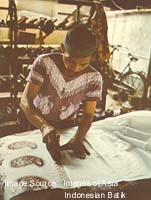 bottom. The block is cut in half at the center so the pattern on each
half is identical. Cap vary in size and shape depending on the
pattern they are needed for. It is seldom that a cap will exceed
24 cm in diameter, as this would make the handling too difficult.
bottom. The block is cut in half at the center so the pattern on each
half is identical. Cap vary in size and shape depending on the
pattern they are needed for. It is seldom that a cap will exceed
24 cm in diameter, as this would make the handling too difficult. of
the design that the artisan wishes to remain the original color of the
cloth. Normally this is white or cream.
of
the design that the artisan wishes to remain the original color of the
cloth. Normally this is white or cream. If
the cap method is utilized, this procedure is normally done by men. The cap are dipped into melted wax. Just under the surface of the melted
wax is a folded cloth approximately 30 centimeters square. When this cloth
is saturated with wax it acts like a stamp pad. The cap is pressed
into the fabric until the design side of the cap is coated with wax. The
saturated cap is then stamped onto the fabric, leaving the design
of the cap. This process is repeated until the entire cloth is
covered. Often cap and canting methods are combined on the
same piece of cloth.
If
the cap method is utilized, this procedure is normally done by men. The cap are dipped into melted wax. Just under the surface of the melted
wax is a folded cloth approximately 30 centimeters square. When this cloth
is saturated with wax it acts like a stamp pad. The cap is pressed
into the fabric until the design side of the cap is coated with wax. The
saturated cap is then stamped onto the fabric, leaving the design
of the cap. This process is repeated until the entire cloth is
covered. Often cap and canting methods are combined on the
same piece of cloth. When
the desired color has been achieved and the fabric has dried, wax is reapplied
over the areas that the artisan wishes to maintain the first dye color
or another color at a later stage in the dying process.
When
the desired color has been achieved and the fabric has dried, wax is reapplied
over the areas that the artisan wishes to maintain the first dye color
or another color at a later stage in the dying process.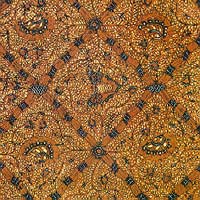 Certain batik designs are reserved for brides and bridegrooms as well
as their families. Other designs are reserved for the Sultan and his family
or their attendants. A person's rank could be determined by the pattern
of the batik he/she wore.
Certain batik designs are reserved for brides and bridegrooms as well
as their families. Other designs are reserved for the Sultan and his family
or their attendants. A person's rank could be determined by the pattern
of the batik he/she wore. Kawung is another very old design consisting of intersecting circles, known
in Java since at least the thirteenth century. This design has appeared
carved into the walls of many temples throughout Java such as Prambanan
near Jogjakarta and Kediri in East Java. For many years, this pattern
was reserved for the royal court of the Sultan of Jogjakarta. The circles
are sometimes embellished inside with two or more small crosses or other
ornaments such as intersecting lines or dots. It has been suggested that
the ovals might represent flora such as the fruit of the kapok (silk
cotton) tree or the aren (sugar palm).
Kawung is another very old design consisting of intersecting circles, known
in Java since at least the thirteenth century. This design has appeared
carved into the walls of many temples throughout Java such as Prambanan
near Jogjakarta and Kediri in East Java. For many years, this pattern
was reserved for the royal court of the Sultan of Jogjakarta. The circles
are sometimes embellished inside with two or more small crosses or other
ornaments such as intersecting lines or dots. It has been suggested that
the ovals might represent flora such as the fruit of the kapok (silk
cotton) tree or the aren (sugar palm). Ceplok is a general name for a whole series of geometric designs based on
squares, rhombs, circles, stars, etc. Although fundamentally geometric,
ceplok can also represent abstractions and stylization of
Ceplok is a general name for a whole series of geometric designs based on
squares, rhombs, circles, stars, etc. Although fundamentally geometric,
ceplok can also represent abstractions and stylization of  Parang was once used exclusively by the royal courts of Central Java. It
has several suggested meanings such as 'rugged rock', 'knife pattern'
or 'broken blade'. The Parang design consists of slanting rows of thick
knife-like segments running in parallel diagonal bands. Parang usually
alternated with narrower bands in a darker contrasting color. These darker
bands contain another design element, a line of lozenge-shaped motifs
call mlinjon. There are many variations of this basic striped pattern
with its elegant sweeping lines, with over forty parang designs recorded.
The most famous is the 'Parang Rusak' which in its most classical
form consisting of rows of softly folded parang. This motif also appears
in media other than batik, including woodcarving and as ornamentation
on gamelan musical instruments.
Parang was once used exclusively by the royal courts of Central Java. It
has several suggested meanings such as 'rugged rock', 'knife pattern'
or 'broken blade'. The Parang design consists of slanting rows of thick
knife-like segments running in parallel diagonal bands. Parang usually
alternated with narrower bands in a darker contrasting color. These darker
bands contain another design element, a line of lozenge-shaped motifs
call mlinjon. There are many variations of this basic striped pattern
with its elegant sweeping lines, with over forty parang designs recorded.
The most famous is the 'Parang Rusak' which in its most classical
form consisting of rows of softly folded parang. This motif also appears
in media other than batik, including woodcarving and as ornamentation
on gamelan musical instruments. longer
dependent on traditional (natural) dyes, as chemical dyes can produce
any color that they wish to achieve. Modern batik still utilizes canting
and cap to create intricate designs.
longer
dependent on traditional (natural) dyes, as chemical dyes can produce
any color that they wish to achieve. Modern batik still utilizes canting
and cap to create intricate designs. world
that is dominated by machines there is an increasing interest in materials
that have been handmade. Batik is one of these materials.
world
that is dominated by machines there is an increasing interest in materials
that have been handmade. Batik is one of these materials.